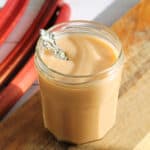
Rhubarb Curd
Sweet, tart, and silky smooth, this homemade rhubarb curd is a delicious way to enjoy seasonal rhubarb. Made in the microwave for a quick and easy method, it's perfect on scones, swirled into yogurt, or used as a filling for your favourite baked treats.
Servings 20
Calories 52kcal
Equipment
Ingredients
- 450 g rhubarb
- 1½ tbsp water
- 1 tbsp caster sugar
- 110 g caster sugar (superfine sugar)
- 50 g unsalted butter
- 2 medium free-range eggs
- ¼ tsp beetroot powder optional
Instructions
- Chop the rhubarb and put it in a small pan with 1 and a half tablespoons of water and 1 tablespoon of sugar. Bring to a simmer and cook until soft and juicy (10-12 mins).450 g rhubarb, 1 tbsp caster sugar, 1½ tbsp water
- Leave the stewed rhubarb to cool.
- Push the cooled rhubarb through a sieve using a large spoon into a bowl to produce puree.
- You will be left with the pulp/fibres of the rhubarb in the sieve, which can be discarded, and rhubarb puree in the bowl which you are going to use.
- You should end up with approx. 300 ml of rhubarb puree.
- In a microwaveable bowl, add the rhubarb puree, butter, eggs and sugar. Mix well to combine. Then microwave it for 1 minute on high. Stir well. Cook for 4 further 1 minute intervals, removing from the microwave and stirring well after each minute.110 g caster sugar (superfine sugar), 50 g unsalted butter, 2 medium free-range eggs
- You should find that your curd has turned glossy and thick and coats the back of a spoon. Optionally at this point, add the beetroot powder for colour. If using I recommend sifting it in and beating until it is fully combined.¼ tsp beetroot powder
- Pass the curd through a sieve once more to remove any stringy pieces of egg or lumps produced during cooking.
Notes
Storage
- Store rhubarb curd in a clean, airtight jar or container in the refrigerator.
- Refrigerate for 1-2 weeks.
- Always use a clean spoon when serving to maintain freshness.
- Freeze in freezer-safe containers for up to 1 year.
- Use fresh, firm rhubarb stalks for the best flavour and colour.
- Sieve the cooked rhubarb mixture for an extra smooth, silky curd.
- Stir vigorously after each minute of cooking to prevent the eggs from scrambling and to achieve a smooth texture.
- The curd will continue to thicken as it cools.
- For a brighter pink colour without using beetroot powder, use red rhubarb varieties when available.
- Spread on toast, crumpets, scones, or English muffins.
- Spoon over pancakes, waffles, or French toast.
- Swirl into Greek yogurt or overnight oats for breakfast.
- Use as a filling for cakes, cupcakes, tarts, Bakewell tarts or meringue pies.
- Layer into trifles, parfaits, or dessert pots.
- Serve alongside shortbread biscuits for an easy dessert.
- Dollop onto cheesecake or vanilla ice cream.
- Fold into whipped cream to create a simple rhubarb mousse.
- Vanilla rhubarb curd - Add vanilla extract or vanilla bean paste.
- Strawberry and rhubarb curd - Blend in a handful of strawberries when cooking the rhubarb.
- Raspberry rhubarb curd - Combine rhubarb with raspberries for a deeper colour and flavour.
- Tangier rhubarb curd - Add the juice of half a lemon to the rhubarb puree before cooking.
Nutrition
Serving: 1tbsp | Calories: 52kcal | Carbohydrates: 7g | Protein: 1g | Fat: 3g | Saturated Fat: 1g | Polyunsaturated Fat: 0.2g | Monounsaturated Fat: 1g | Trans Fat: 0.1g | Cholesterol: 22mg | Sodium: 8mg | Potassium: 72mg | Fiber: 0.4g | Sugar: 6g | Vitamin A: 109IU | Vitamin C: 2mg | Calcium: 23mg | Iron: 0.1mg